
On Your Second Tokyo Street Kart Ride, Enjoy the Time With Strangers Too: Tips for Getting to Know Fellow Participants
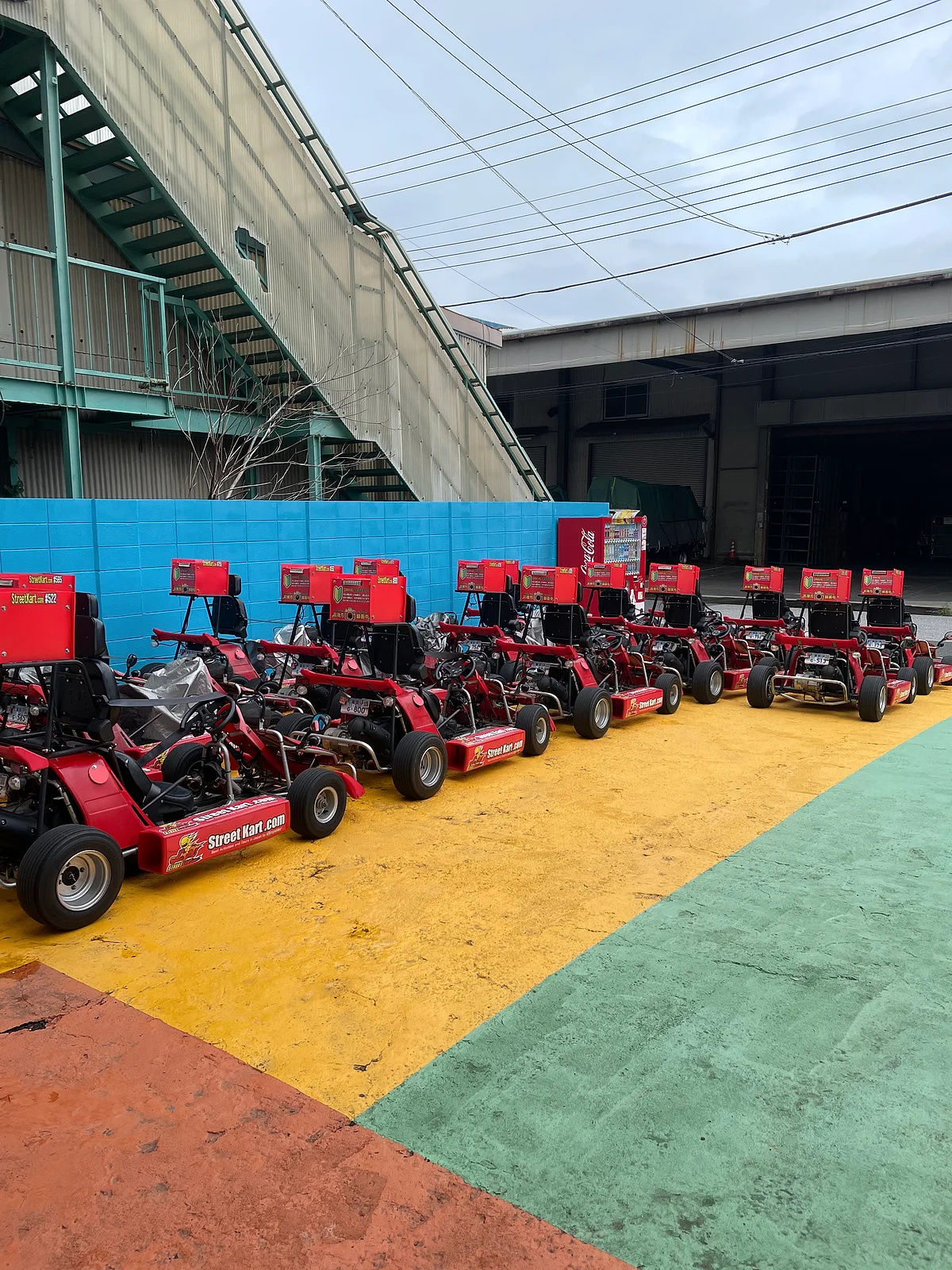
On Your Second Tokyo Street Kart Ride, Enjoy the Time With Strangers Too: Tips for Getting to Know Fellow Participants
A few unfamiliar faces are lined up in front of the reception desk.
You catch snippets of different languages from here and there. But nobody has said anything like "So these are the people I'll be driving with." Everyone is still quietly sizing each other up.
On your first ride, this was probably the most nerve-racking part. You didn't know what was about to happen, and you had no room to notice the people around you. Am I right?
The second time is different. Once you know how things go, you have a little more room to look around.
This article is for anyone in Tokyo thinking about booking Street Kart a second time. It assumes you might end up in the same session as people you've never met, and shares tips for enjoying your second ride even more. We'll also go over how the day works, so don't worry if your memory of the first time is a bit fuzzy.
What's Different Between the First and Second Time?
The first time, your head tends to be full of one thought: "Can I keep up?"
You concentrate hard so you don't miss anything the guide says. Once you're moving, you keep worrying about the distance to the kart in front of you. Every time you stop at a light, you let out a sigh of relief. Then afterward you realize, "Wait, I barely remember the scenery." That's perfectly fine. The first ride is about getting the flow into your body.
The karts have no roof, and you sit low to the ground. The wind, the sounds of the city, even the rumble of a bus engine idling next to you at a red light all reach you directly. If you were too nervous to take it in the first time, you can really savor it on your second ride.
On the second ride, knowing the steps leaves you some breathing room.
Try turning that room toward the people riding with you. Where is the person in front of you from? The person behind you looks like a first-timer. You're in the same line, waiting at the same lights. Those small moments add up, and by the end you may find yourself feeling like you're part of a crew.
In Taiwan, sharing a table with strangers at a restaurant (併桌) is fairly common, isn't it? Japan doesn't have as strong a table-sharing culture, and people don't often strike up conversations with strangers. That's exactly why a tour, a place where everyone does the same thing together, can be a great way to connect with people while traveling.
Why Would You Be Riding With Strangers in the First Place?
Let's get this basic point clear first.
Street Kart isn't a service where you drive wherever you like on your own. It's a guided tour along a set course for each location, with a guide leading the way.
This article assumes you end up in the same session as other participants. Please check how groups are put together on the official website (kart.st) when you book.
On the day of the tour, guidance is basically in English. Whether you can get guidance in Japanese or other languages depends on the staff that day and isn't guaranteed. If language is a concern, contact them through the official website when you book. The website itself is available in 22 languages.
People from all sorts of countries listening to the same English explanation together: I actually think that's a lovely scene. There are bound to be others for whom English isn't a first language. If something doesn't make sense, catch the eye of the person next to you and tilt your head. Sometimes that alone is enough to start a conversation.
A Quick Review of How the Day Goes
For those whose first ride was a while ago, here's a step-by-step look at how the day goes.
Duration and departure times vary by plan and location, so here I'll only describe what happens and in what order. For specific times, check the information for the session you booked.
The locations don't have parking. Take the train or subway.
In Japan, it's normal to arrive a little early rather than right on time. Follow the meeting instructions for your session and give yourself plenty of time.
The best courtesy you can show the people you're meeting for the first time is to arrive early. It makes a much better first impression, too.
At reception, the staff check the documents you need to drive.
Which documents you need depends on your country and the type of license you hold, so I won't list just some of them here. Before you go, check the official website's driver's license information page to see what applies to you.
Even if everything went fine the first time, check again. Has your license expired? Did you forget a document? On a second ride, "it's probably fine" is the most dangerous assumption.
Participants must be 18 or older. Check the details of the age and license requirements on the official website as well.
Before departure, the guide gives a briefing in English: how to drive, the signals, and what to watch out for.
Even if you've heard it before, a different location means a different course. Don't tune it out thinking "I already know this." Listen carefully, the same way a first-timer would. That's good manners on a second ride.
Once you're on the road, participants follow the guide. The route is fixed for each location.
Keep your distance from the kart in front. Move according to the guide's signals. Follow Japanese traffic rules. That's all you need to do, so focus on just that.
Japan drives on the left. If you come from a country that drives on the right, you might hesitate for a moment when turning at an intersection. Even on your second ride, I recommend watching the kart ahead closely before you turn.
When the tour ends, you return to the location where you started.
This is a great time to talk with the people you just met. More on that in the next section.
Four Moments to Get to Know Fellow Participants
You don't need to chat while driving. In fact, please don't. While driving, your attention belongs on the guide and the kart ahead.
There are plenty of chances to connect before and after.
First, say a few words while waiting at reception. The easiest is "Where are you from?" That's all you need.
When Japanese people meet someone for the first time, they often give a slight bow and say "yoroshiku onegaishimasu." It's hard to translate directly, but it means something like "a polite greeting to someone you're about to do something with." The Chinese "请多关照" is probably close. If there are Japanese participants, give it a try. The mood will soften right away.
As a second-timer, you might also add, "I've done this once before." First-timers are often pretty nervous, and having someone experienced around tends to put them at ease.
That said, don't try to explain driving techniques or rules yourself. Something like "The guide explains things really clearly" is just right. Safety explanations are the guide's job.
During the briefing, the shared explanation becomes a natural topic. After it ends, try "Did you catch all of that?"
That works as a conversation starter no matter where someone is from. Everyone heard the same thing at the same time, so there's no need to hunt for a topic.
Use red lights as time to take in the scenery. I said not to talk while driving.
But moments like this happen: you stop at a light, and the person in front glances up to the side. You follow their gaze, and there's a huge building.
Even without exchanging a word, you saw the same thing at the same moment. That memory becomes something to talk about later.
For photos and videos, follow the guide's instructions. Don't use your phone while driving. Take your time with photos and videos before departure and after you get back.
Once you finish the ride, take photos of each other. Coming back is the most natural time to strike up a conversation.
Ask, "Can I take a photo for you?" and take one with their phone. This part really matters!
Here's one photo tip. The karts sit low, so crouch down when you shoot. Shoot from about knee height, angled slightly upward. The person and the kart both fill the frame, and the shot has much more impact than one taken standing. For editing, a slight boost in saturation in Lightroom or VSCO is just right.
If you swap Instagram accounts after taking photos, you can send each other pictures after the trip too. For hashtags, try "#東京旅行" and "#tokyotrip." If you have friends who speak Chinese, adding "#东京旅行" and "#東京自由行" also makes it easier to find your own posts later.
Switch Locations on Your Second Ride and the Scenery Changes Completely
There are seven locations in Tokyo.
However, Akihabara Store 1 and Store 2 are in nearly the same spot, as are Shibuya and Shibuya Annex. So it's not the case that you can ride in seven different areas of Tokyo.
Still, the scenery along the routes from Shibuya, Akihabara, Shinagawa, and Tokyo Bay (Shinkiba) is clearly different. Choosing a different location from your first time is the easiest way to make your second ride feel fresh.
Below, I've separated the landmarks you'll see along each route from places you can visit before or after the tour. The before-and-after spots aren't on the tour route, so please keep that distinction in mind as you read.
On the Shibuya route, you'll see the Scramble Crossing, Takeshita Street in Harajuku, and zelkova-lined Omotesando. Many people will recognize these from photos.
Omotesando is lined with distinctive buildings designed by well-known architects. Looking up from the low seat of a kart, their shapes should look different from usual.
Before or after the tour, stop by the Hachiko statue, about a 10-minute walk from the location. It's a classic meeting spot, so it could be fun to make plans with people you met on the tour: "See you at Hachiko later."
It's a 5-minute walk from the nearest station, Shinsen, or about 10 minutes on foot from Shibuya Station.
On the Akihabara route, you'll see the signs of Electric Town, the red-brick Marunouchi building of Tokyo Station (opened in 1914), and Ginza.
The Wako clock tower at the Ginza 4-chome intersection and the Kabuki-za theater: this area is where Tokyo's old and new faces blend together. If you rode in Shibuya the first time, the streets here will feel completely different.
Before or after the tour, visit Kanda Myojin, a 10-minute walk from the location. It's a shrine with 1,300 years of history, also known for blessings for good relationships. Saying a prayer for the connections you made on the tour sounds kind of nice, doesn't it?
On the Shinagawa route, you'll see the Rainbow Bridge, Tokyo Tower in the distance, the Takanawa area home to Sengakuji Temple, and the bay area around Shibaura and Tamachi. Being close to Tokyo Bay, the sky feels wide open on this route.
Before the tour, I recommend Shinagawa Shrine, a 5-minute walk from the location. The torii gate at the top of the stone steps is memorable.
If you still feel like walking after the ride, head to Tennozu Isle, about 20 minutes on foot. Strolling along the canal, you may get to talk a little more at leisure with the people who were strangers just hours before.
It's a 3-minute walk from Kita-Shinagawa Station.
On the Tokyo Bay route, you'll see the bayside roads of Shinkiba, Odaiba, the 798-meter Rainbow Bridge, and the 333-meter Tokyo Tower.
At night, the Rainbow Bridge is lit up. Check the official website for which time slots you can book. Whether you ride in daylight or after dark changes how the scenery looks, and that's part of the fun.
It's an 8-minute walk from Shinkiba Station. The atmosphere is completely different from Shibuya or Akihabara, where buildings are packed tightly together. If your first ride was through the city center, this one should feel especially fresh.
Outside Tokyo, there are also locations in Osaka and Okinawa, for nine locations nationwide. After two rides in Tokyo, your third could be on your next trip to Osaka or Okinawa.
Things to Check Before Booking
Once you've decided to book a second ride, check the following.
Weekends tend to fill up quickly. If your itinerary is set, book early.
Reservations are accepted via Facebook, LINE, and email. Contact details, the latest information for each location, and plan details are all on the official website. Start there.
For departure times and duration, check the latest information for your preferred location and plan on the official website (kart.st). Prices also vary by season and time slot, so check the official website (kart.st) for current information. For anything not covered in this article, the most reliable approach is to check the official website or ask directly when you contact them to book.
Even if the documents you need to drive are the same as last time, check again just to be safe. You don't want to find out mid-trip that your license has expired.
Memories of Riding With Strangers Become the Best Story of Your Trip
Your first ride was about whether you could drive properly.
Make your second ride one where you also bring home who you rode with.
The person you asked "Where are you from?" at reception takes your photo after the ride. A few days later, scenes from their country start showing up on the Instagram account you swapped.
A connection that began with simply standing in the same line in Tokyo can sometimes carry on, loosely, long after the trip.
So, which location will you ride from next, and who will you ride with?
Start by checking out the Tokyo locations on the official website.
This article was originally written in Japanese and translated using AI. Some expressions may read unnaturally, and we appreciate your understanding. For the most accurate and up-to-date information, please refer to the official site at kart.st.
Street Kart is not affiliated with Nintendo or the Mario Kart series in any way. We do not provide costumes of Nintendo characters, and such costumes may not be worn during tours even if brought by participants.