

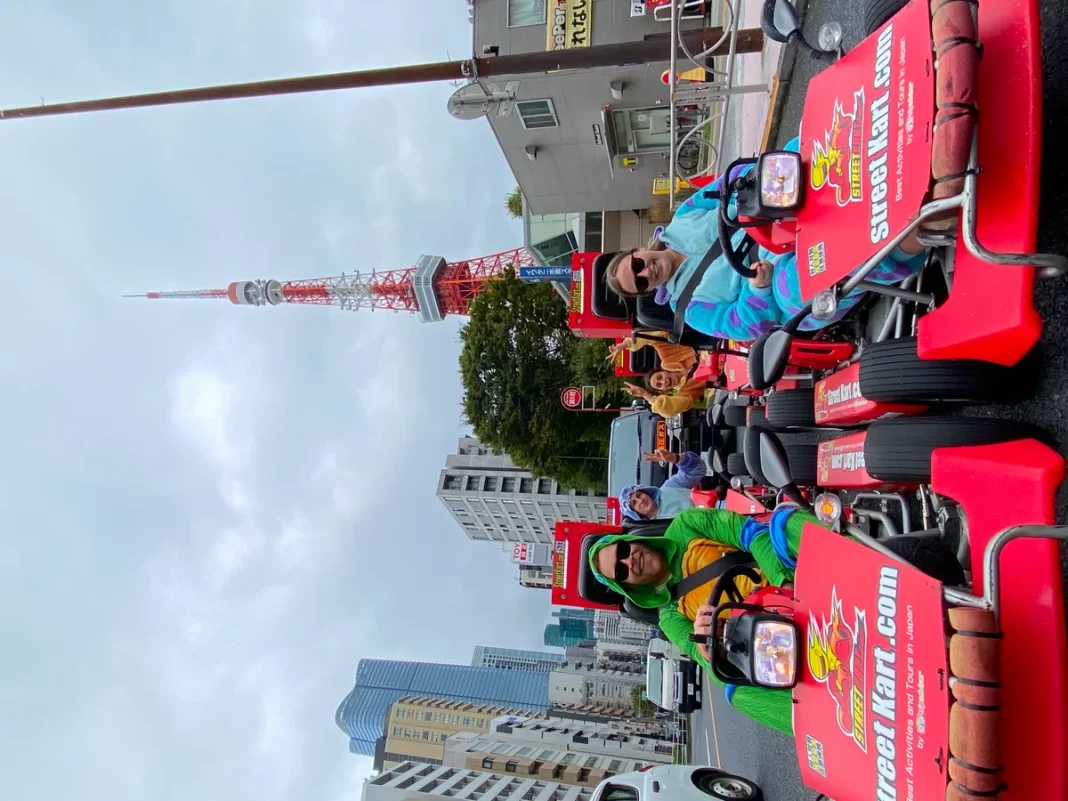
Why Street Kart Photography Shines in Tokyo | An Experience Guide for Photo Lovers
Picture this: colorful karts lined up against the backdrop of Shibuya’s famous scramble crossing. It’s one of the most sought-after photo moments in Tokyo right now. So much of the viral footage you see on Instagram and TikTok comes from street kart (公道カート) experiences that use the streets of Tokyo itself as the stage. In this guide, we’ll walk photography enthusiasts through how to make the most of Tokyo street kart experiences and capture incredible shots along the way.
Why Photo Enthusiasts Are Drawn to Tokyo’s Street Karts
Tokyo is packed with photo-worthy spots, which means you need an efficient way to hit multiple scenes in one outing. Hop on a street kart, and over the course of a roughly two-hour tour, you’ll cruise past one iconic Tokyo landmark after another. That sense of becoming one with the city—something you just can’t get on foot or by train—is what makes the photography experience so exhilarating.
Tokyo Tower at dusk. Shibuya as the neon signs flicker to life. The Odaiba skyline glittering across Rainbow Bridge. The magic of street kart photography is that you capture it all from a “this is what I’m seeing as I drive” perspective. Translate that into video, and the cityscape blends with streaking lights to create footage that feels like the opening sequence of a movie.
Street Kart operates eight locations (six in Tokyo, plus Osaka and Okinawa), and the Tokyo area alone offers a huge range of photo opportunities. With over 150,000 tours completed, more than 1.34 million customers served (as of November 2023), an average customer rating of 4.9/5.0 stars, and over 20,000 total reviews, the company’s track record speaks for itself. As an experience that’s genuinely photogenic, it’s gaining serious traction among international visitors to Japan.
What You Need to Know Before Shooting
The first thing to understand is that street kart tours are guide-led. You’ll follow a set course with a trained guide leading the way at the front. Street Kart was the first kart operator in the industry to deploy guides specifically trained for foreign drivers, with a website available in 22 languages and services provided in English. Since English guidance is the default, brushing up on a few basic English phrases beforehand will make things go even more smoothly.
You’ll need a valid license to drive in Japan to participate. License requirements vary by country, so check the driver’s license guide on the official site for full details. If you’re using an overseas license, you may be required to bring a Japanese translation, so we highly recommend confirming this before you travel.
Now, about the costumes—the question photography lovers always ask. Street Kart does not provide Mario Kart-related costumes. Street Kart has no affiliation whatsoever with Nintendo or the Mario Kart series. The costumes available are an original lineup, and you can enjoy capturing your ride through the streets of Japan with Street Kart’s own distinctive style.
Practical Shooting Techniques for Photo Enthusiasts
Choosing Your Camera and How to Mount It
If you’re shooting on a smartphone, the image stabilization on recent models will be your best friend. The iPhone’s Action mode and Galaxy’s Super Steady mode are well-suited for capturing footage while in motion. Plenty of participants also bring along action cameras like GoPros.
Safety is paramount here. Operating a camera while driving is dangerous, so the trick is to wait for moments when you stop at traffic lights or pause along the route. Set up any video recording in advance, and when you’re actually driving, keep your focus on the road.
Chasing Magic Hour Light
One of Tokyo’s most photogenic windows is the magic hour between roughly 5:00 PM and 7:00 PM. As the sky shifts through gradient colors and street lamps and neon signs begin to glow, you’ll find it much easier to capture striking shots. Silhouette photos with Rainbow Bridge in the background are a particularly popular composition on social media.
Night tours are equally rewarding for photography. There’s something special about catching neon reflections on the pavement, or that moment when wet streets after rain glow pink with reflected light. That said, low light at night can lead to motion blur, so a lens with a wide aperture or a smartphone with a solid night mode will make a noticeable difference.
Working with Composition
The low vantage point is one of the kart’s biggest photographic strengths. Looking up at Tokyo Tower or towering skyscrapers from a perspective close to the ground gives you dramatic shots that are tough to replicate on foot. International visitors especially love this angle, as it’s something they can’t get back home.
The “convoy shot”—capturing a line of karts stretching out ahead of you—is another popular composition. Coordinate with the participants in front of and behind you before the tour to plan your shooting moments, and you’ll dramatically increase your chances of nailing that perfect frame.
Why Photographers Choose Street Kart
There are several reasons photography enthusiasts gravitate toward Street Kart specifically.
First, there’s the track record and reliability. With more than 150,000 tours completed, over 1.34 million customers served, and an average rating of 4.9/5.0 stars, the numbers reflect a consistent quality of service. The experience is widely known as one that even first-timers can confidently join, which means you can focus on your photography with peace of mind.
Then there’s the attention to international guests. Street Kart was the first kart operator in the industry to deploy guides specifically trained for foreign drivers, and the 22-language website removes a lot of the anxiety around booking. For overseas visitors, this multilingual support is genuinely reassuring.
A fleet of over 250 vehicles is another major draw. The wide variety of kart designs means that riding in coordinated colors with your group amplifies the visual impact of your shots. It also makes for cleaner color balance when you arrange the photos in your social feed.
The six Tokyo locations are another standout feature. Being able to choose your starting point gives you the flexibility to plan around the streetscapes you want to photograph. Departing from Shibuya, Asakusa, or Odaiba each gives you a completely different face of Tokyo to capture.
The peace of mind that comes with guide-led tours matters too. Your guide safely navigates the predetermined route, making it easier to pass through photogenic spots, and since they handle the traffic situation up front, you can put more mental energy into your shots.
The fact that over 20,000 reviews have been accumulated is yet another indicator of the service’s consistency.
Common Questions and Tips for Tackling Them
“What if I can’t speak English?” is a worry plenty of people have. Guides are well-versed in handling international visitors, so basic instructions come across clearly with gestures, and using a translation app alongside makes communication far less stressful.
“What happens on bad weather days?” is another frequent question. Rainy day operations and reservation changes vary by location, so check the official site for specifics. That said, the unique atmosphere of wet pavement reflecting light after rain can actually make for incredible shots, and light rain can sometimes turn into a photographic opportunity.
“I’m worried about dropping my camera or phone” is also a common concern. For safety, a strap is essential—plan on bringing one that loops around your wrist or neck. If you have a chest mount accessory, you can shoot the streetscape hands-free, which is a big advantage.
Timing your reservation matters too. Weekends, holidays, cherry blossom season, and fall foliage season fill up fast, so booking about two weeks in advance is a safe bet. If you’re going specifically for the photography, evening and night slots are especially popular. For detailed booking availability and additional information, visit https://kart.st/.
Hashtags Worth Using for Your Social Posts
After the shoot, sharing on social media is part of the fun. Combining Japanese and multilingual hashtags helps your content reach a wider audience.
In Japanese, hashtags like “#東京観光,” “#東京旅行,” and “#東京カート” are the basics. For English-speaking audiences, “#TokyoTravel,” “#TokyoStreetKart,” and “#JapanTravel” are go-to options.
On TikTok, short videos around 15 seconds that combine streetscapes with sunset tones tend to perform well in terms of reach. The same applies to Instagram Reels, where edits that capture a single highlight moment really resonate.
Enjoy Street Kart Photography in Tokyo
Have you ever seen Tokyo from this perspective? Not on foot, not by train, not by taxi—but holding the wheel yourself and feeling the city around you as you drive. When that sense of connection gets captured in your photos and videos, it becomes more than just a travel record. It becomes a memory that genuinely sticks with you.
For anyone passionate about photography, a street kart experience in Tokyo is one of the most efficient ways to document a wide variety of scenes in a short amount of time. It’s getting attention as an opportunity to capture sides of Tokyo—from your own perspective—that you’d rarely encounter through standard sightseeing.
Reservations can be made through kart.st. Weekend and evening slots fill up quickly, so we strongly recommend booking early. For detailed information and the latest operational updates, please check the official site.
Are you ready to frame Tokyo through your own lens? Alongside the city’s one-of-a-kind scenery, an experience that lets you capture truly memorable shots is waiting right here.
A Note About Costumes
We do not offer rentals of any costumes related to Nintendo or “Mario Kart.” Only costumes that respect intellectual property rights are available.
